
English| EUR
Suggested for you
More currencies
Choose a language
The Rideau Canal stretches 202 kilometres between Ottawa and Kingston, threading through rivers, lakes, and hand-cut channels. For anyone planning to navigate the waterway—whether by private boat, rented houseboat, or commercial vessel—understanding the lock system is the first step in route planning.
Quick answer
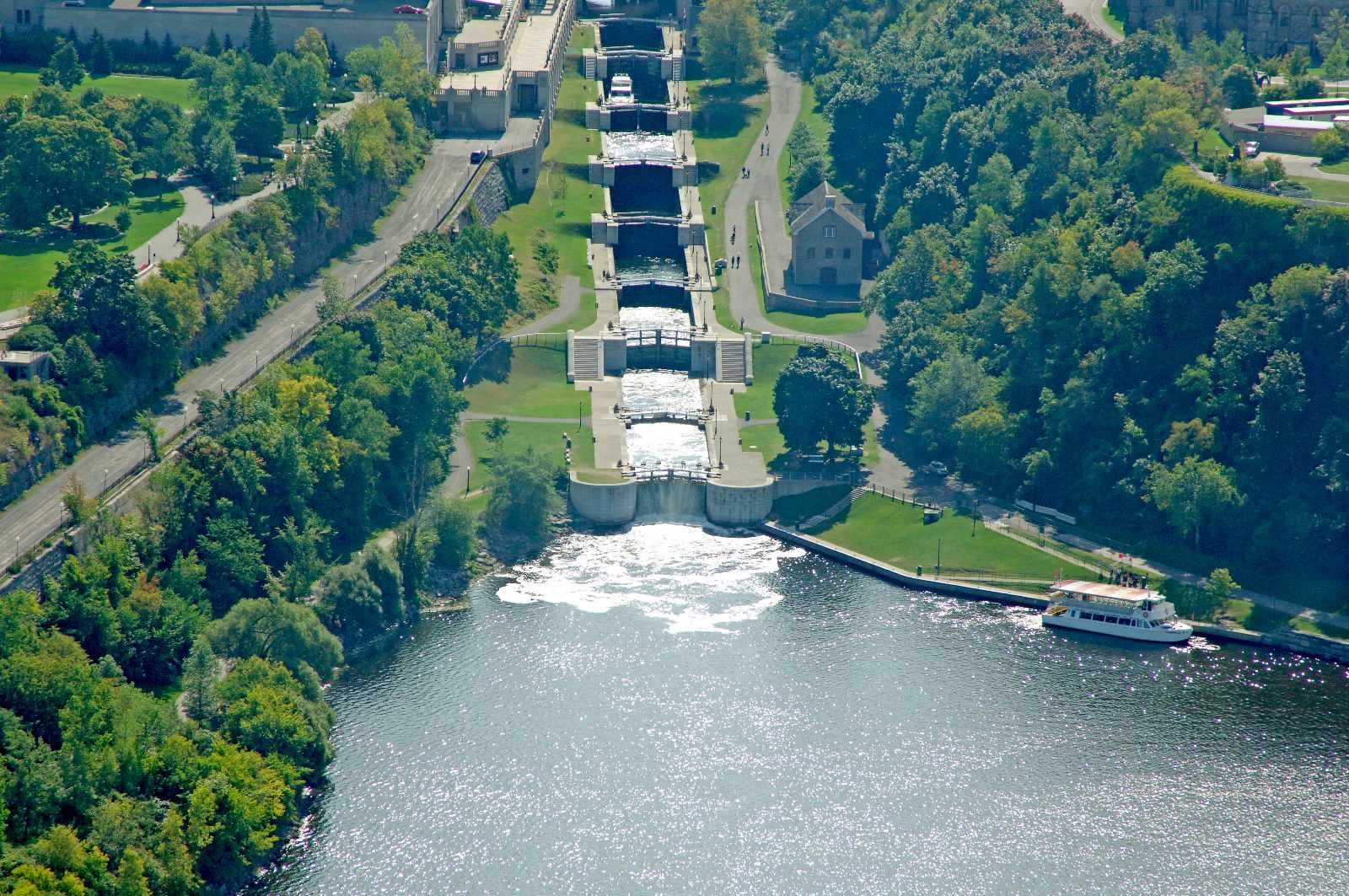
The Rideau Canal contains 47 locks organized into 45 lock stations between Ottawa and Kingston. Some stations operate a single lock chamber, while others—like the Ottawa Locks and Jones Falls—use multiple chambers in sequence to manage larger elevation changes. The entire system is hand-operated by Parks Canada staff during the navigation season, typically mid-May through mid-October.
The Rideau Canal was engineered as a military supply route in the 1820s, and its lock system reflects nineteenth-century hydraulic ingenuity. Forty-seven individual lock chambers are grouped into forty-five stations along the waterway, lifting and lowering vessels a total of 83 metres between Lake Ontario and the Ottawa River. The largest single drop occurs at Jones Falls, where four locks work in series to manage a 18-metre elevation change. Each lock station operates manually—lockmasters and staff open and close the gates, adjust water levels, and guide vessels through by hand, much as they did two centuries ago. This human-powered system means lockage takes time. A single passage averages fifteen to twenty minutes at smaller stations, longer at multi-chamber sites during peak summer traffic. Boaters planning a full canal transit should budget three to five days for the journey, accounting for lockage delays, overnight mooring, and the physical distances between stations. How many locks on the Rideau Canal becomes a practical question when plotting daily mileage. The waterway is not evenly distributed—some stretches pass several lock stations in quick succession, while others open into long lake crossings with no locks for hours. The busiest section runs from Ottawa to Smiths Falls, where eleven stations cluster within the first sixty kilometres. Beyond Newboro, the southern half of the canal spreads locks more thinly across wider lakes and slower rivers. Navigating the Rideau lock system requires no special permit for recreational craft, but fees apply for lockage service and overnight mooring at Parks Canada facilities. The canal operates seven days a week during season, with most lock stations staffed from 09:00 to 18:00 or 19:00 depending on traffic patterns. Arriving early in the day ensures passage before afternoon congestion builds at popular sites like Merrickville and Chaffeys Lock. The Rideau remains one of the oldest continuously operated canal systems in North America, and its lock count—unchanged since 1832—anchors its UNESCO World Heritage designation.
“Forty-seven lock chambers lift vessels 83 metres between Lake Ontario and the Ottawa River, unchanged since the canal opened in 1832.”
The Rideau Canal features a historic system of locks designed to navigate the 202-kilometre waterway between Ottawa and Kingston. The canal is recognized for its unique engineering and remains a functioning legacy of 19th-century infrastructure.
Total Lock Count
The Ottawa Flight
Highest Elevation
Lock Construction
UNESCO Heritage Status
Access to Rideau Canal lock sites is free for visitors. Fees only apply for those requiring specific lockage and mooring services for vessels.
Verdict: A typical visitor pays 0 CAD for site access, with additional fees required only for vessel lockage and mooring services.
The lock stations along the Rideau Canal operate on a consistent weekly schedule, with extended hours during weekend evenings.
The Rideau Canal administrative offices and primary visitor information are located in Smiths Falls. The most accessible approach for regional visitors is via Highway 15 or Highway 43.
Highway 15 North to Beckwith Street South
Ontario Northland to Smiths Falls Station
From Smiths Falls town centre to 34 Beckwith Street South
To ensure you have sufficient time for your inquiries, utilize the best arrival window of 09:00–16:00. This avoids late-day congestion and provides direct access to staff at the 34 Beckwith Street South location.
Everything you need to know about how many locks on the rideau canal
There are 45 locks along the main navigational route of the Rideau Canal, plus two additional locks at the entrance to the Tay Canal, bringing the total to 47. You will find these structures spread across 24 distinct lockstations along the 202-kilometre waterway. Understanding how many locks on the rideau canal exist helps visitors appreciate the scale of this UNESCO World Heritage Site. Many travelers find that exploring the history of this engineering marvel adds depth to their journey through the Ontario wilderness. Because of the variation in historic counting methods, some sources may cite different numbers, but 45 remains the standard count for the primary system. Knowing exactly how many locks on the rideau canal you might encounter helps in planning your itinerary. Access to the lock sites themselves is free, though specific fees apply if you are utilizing lockage or mooring services. Please note that these fees are separate from any general entry requirements. You can visit the official Parks Canada website for detailed information regarding current service pricing. For the most efficient transit and to avoid late-day congestion, the best arrival window for your boat is between 09:00 and 16:00. This timing significantly improves your chances of completing a full lockage transit during standard operating hours. Always monitor your progress to ensure you arrive within this recommended window. While there are 45 operational locks for navigation, you should consult the official Parks Canada portal to manage your specific logistics. Booking requirements or permits may vary based on your vessel type and the duration of your stay. Ensuring you are prepared allows you to focus on the experience of the historic transit. Some confusion regarding how many locks on the rideau canal exist arises because historic counts often included older structures that have since been replaced or consolidated. For example, a single modern lock replaced a previous flight of three locks in Smiths Falls, changing the historical total. Keeping this context in mind helps clarify why you might see different figures in older literature versus current park statistics.